
As Design Systems Lead at Lithia, my team and I transformed our Sequoia component library into a comprehensive design system that streamlines product development across the enterprise.
By establishing clear documentation standards, revamping design-to-development handoff processes, and aligning component libraries between Figma and production code, we created a reliable and scalable foundation for cross-functional teams.
Since launch, design inconsistencies and the creation of redundant components have dropped precipitously. Delivery times have also accelerated for both designers and engineers. Teams can now confidently build and iterate on products with far less friction and uncertainty.
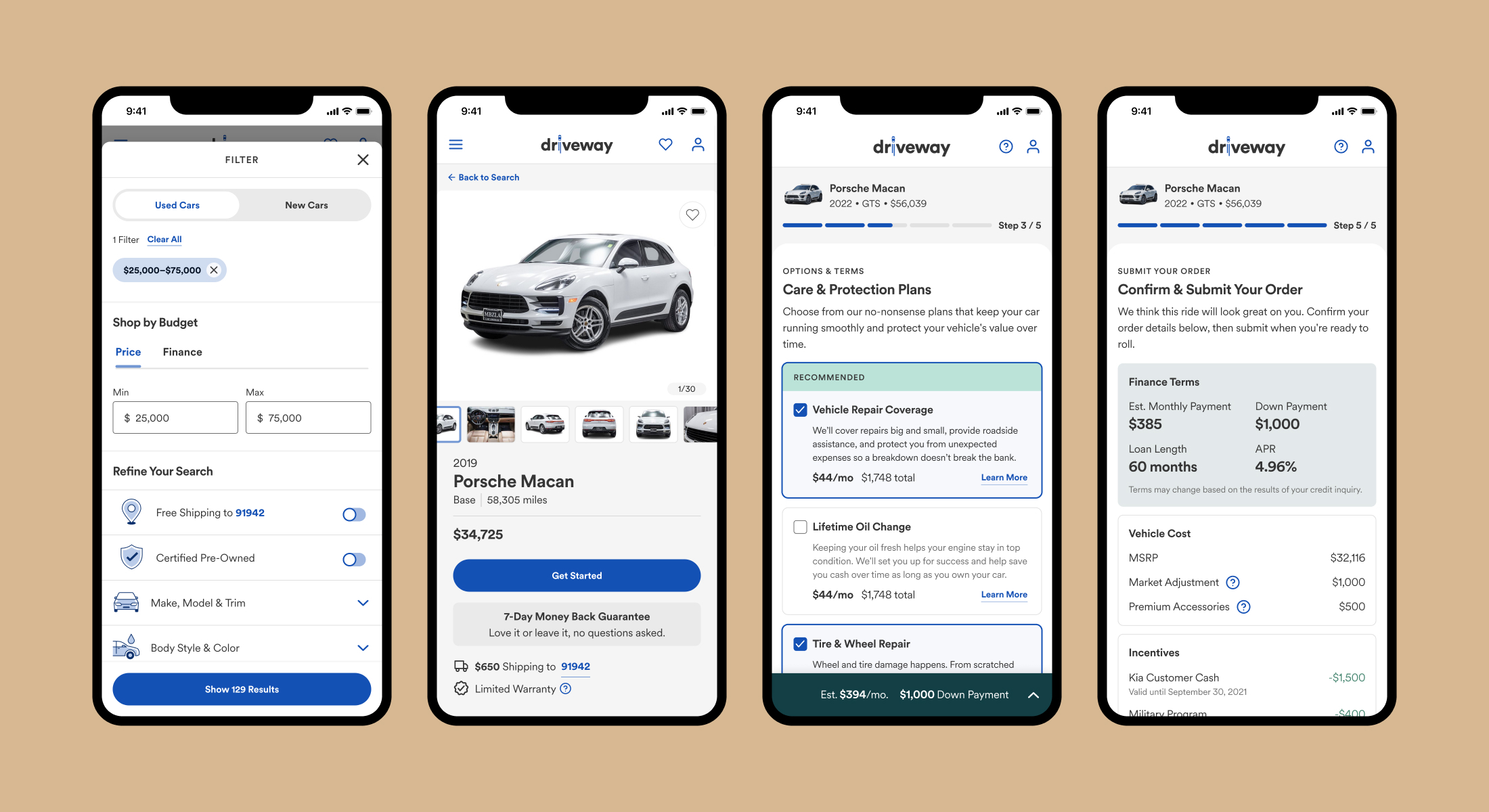
The Sequoia DS at work. These are selected screens from Driveway's shop and checkout flow.
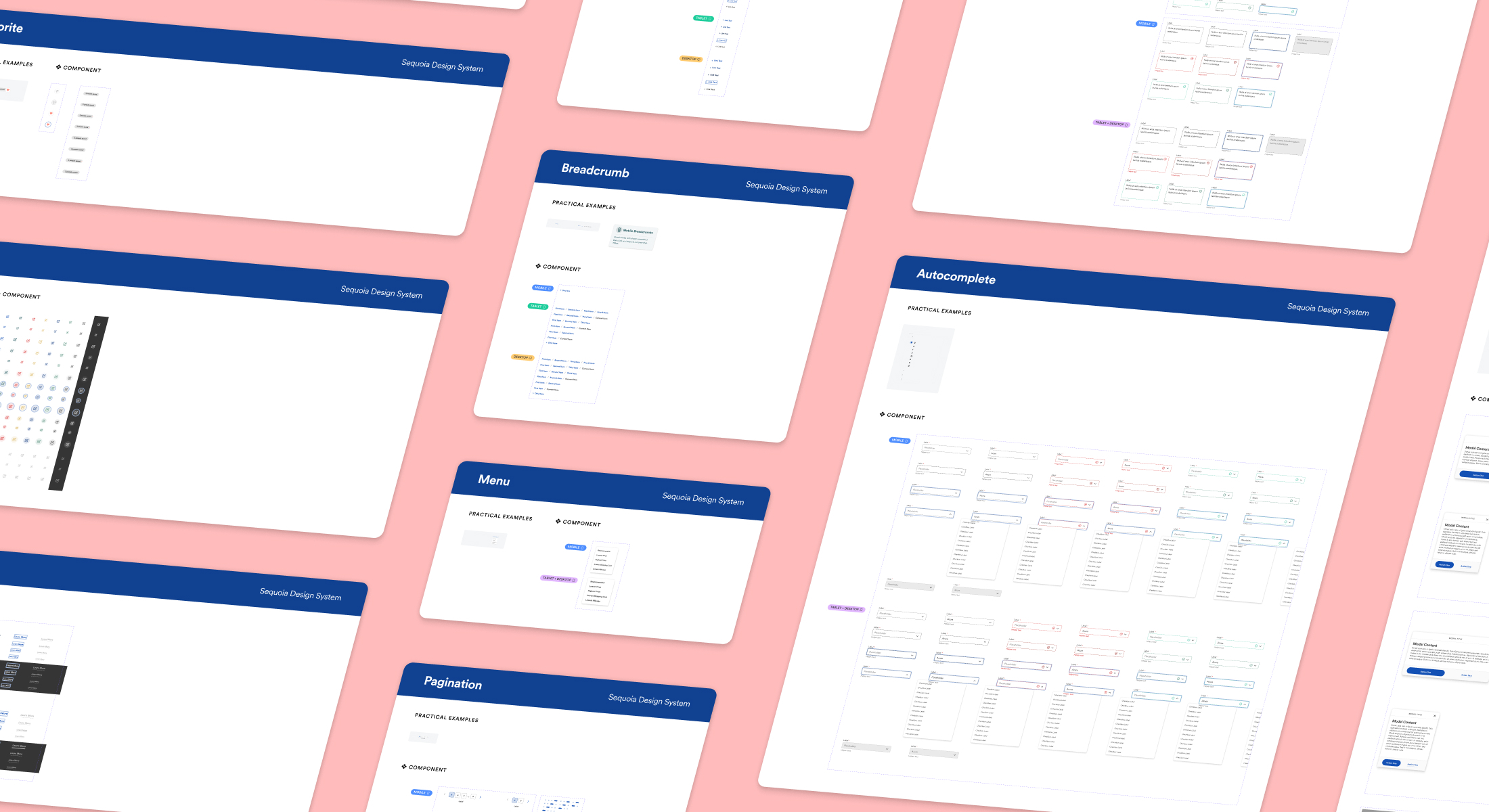
The core Figma library is organized for clarity and scalability. Once imported, components are easy to find. Each component description houses links to documentation and Storybook.
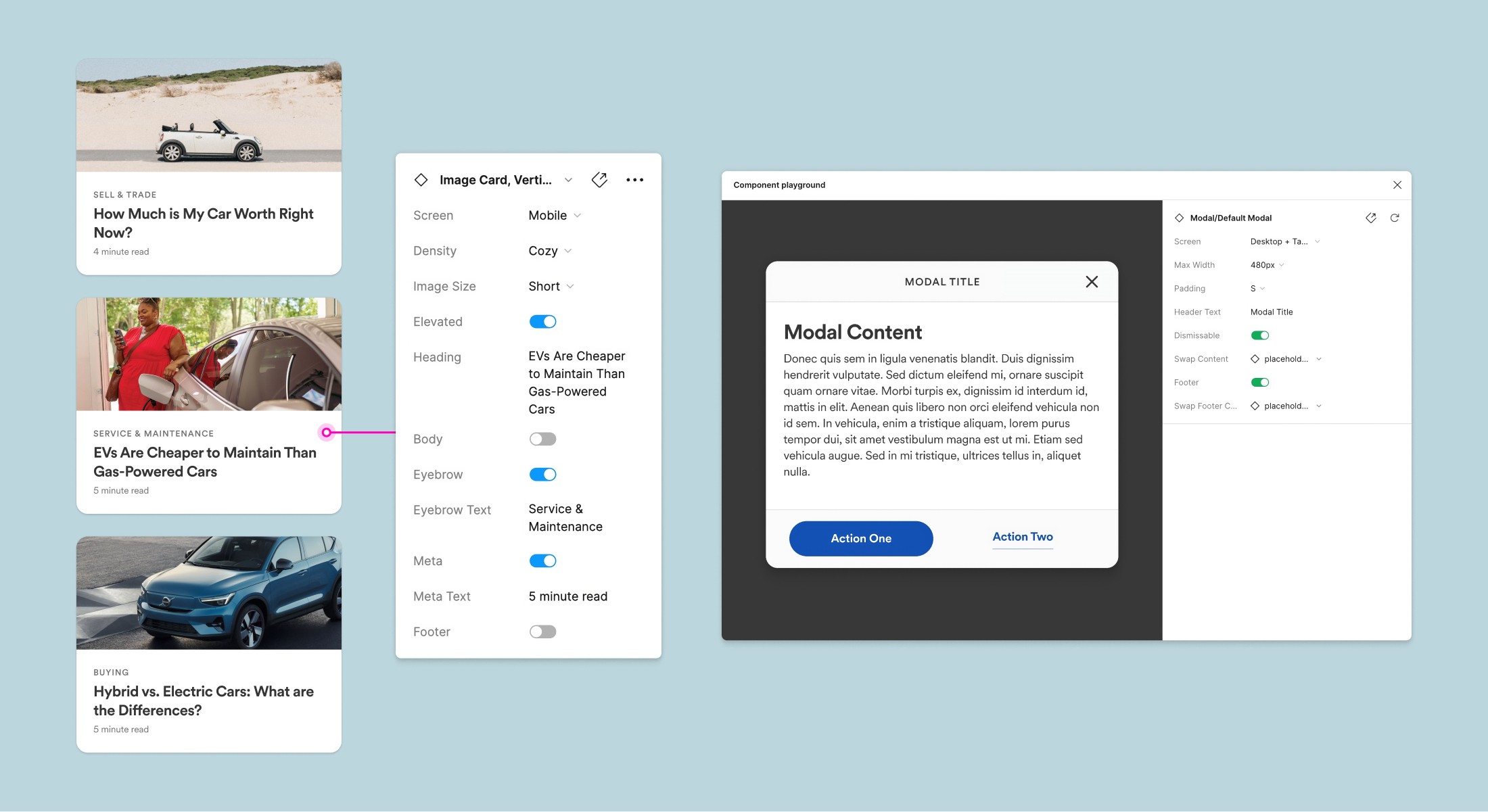
Figma component properties should, at minimum, support their real-world permutations. Their configuration should also be approachable for any designer or engineer.